Servicing Maitland & the Hunter Valley
Mon–Fri 7am–5pm · Sat 8am–2pm







HOME > BEES & WASPS
Bee & Wasp Control in Maitland
Safe bee and wasp nest removal across Maitland and the Hunter Valley. BioStrike handles aggressive wasps and wherever possible advising of relocation of honey bees.
BEES & WASPS
A few bees in the garden are a welcome sign of a healthy backyard, but a wasp nest under the eaves or a swarm in a wall cavity is a genuine hazard, especially for children, pets and anyone with an allergy. BioStrike removes the danger safely across Maitland and the Hunter Valley, destroying aggressive wasp nests and wherever possible, advising relocation of valuable honey bees rather than killed.
BEE & WASP SPECIALISTS
Bees and wasps are not the same problem
It matters which one you have. European wasps and paper wasps become increasingly aggressive through the warmer months and will defend their nest in numbers, delivering repeated painful stings. Honey bees, by contrast, are vital pollinators and are usually only defensive when their swarm or hive is threatened. Because of their environmental value, our first preference for a bee swarm is always relocation through a beekeeper, not extermination.
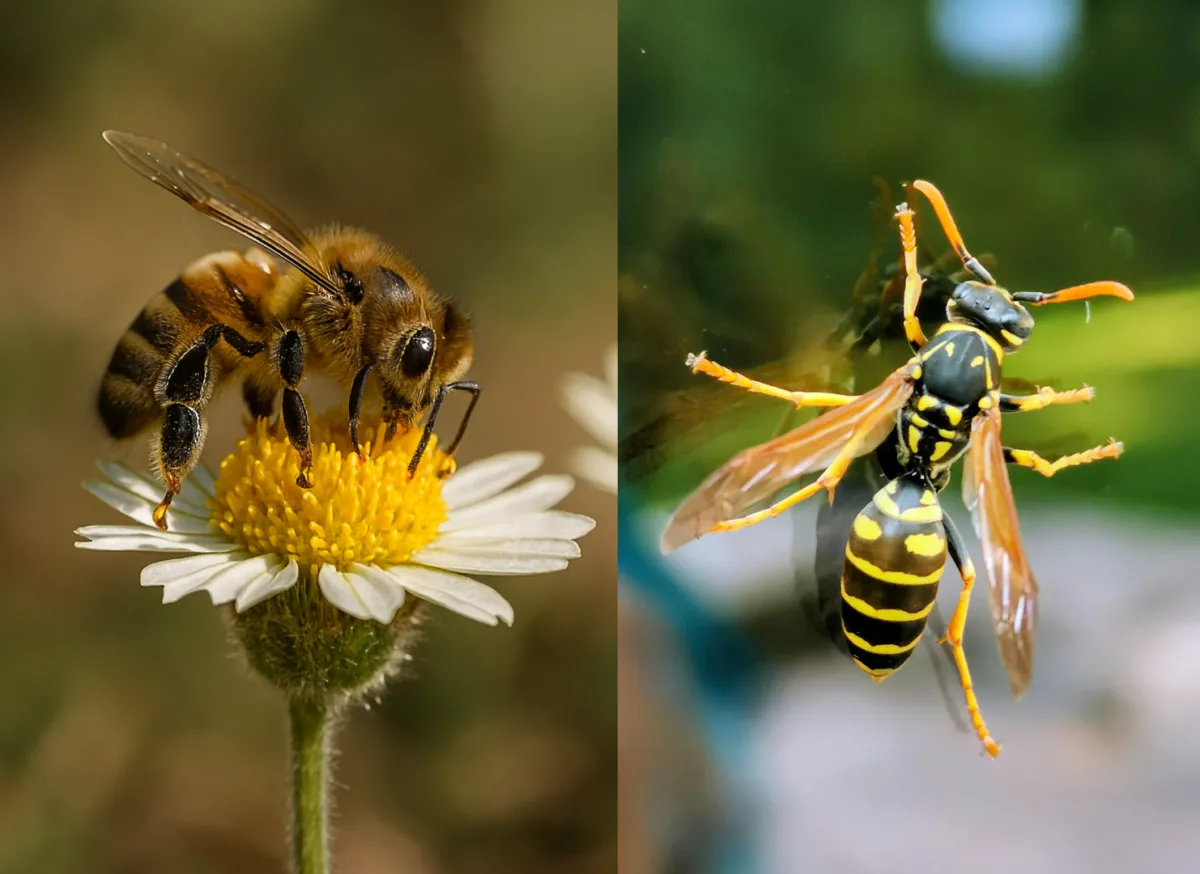
Bees vs Wasps
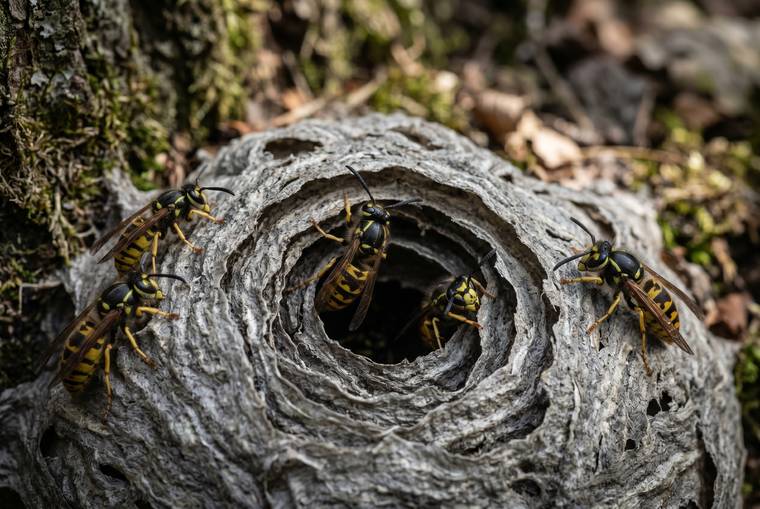
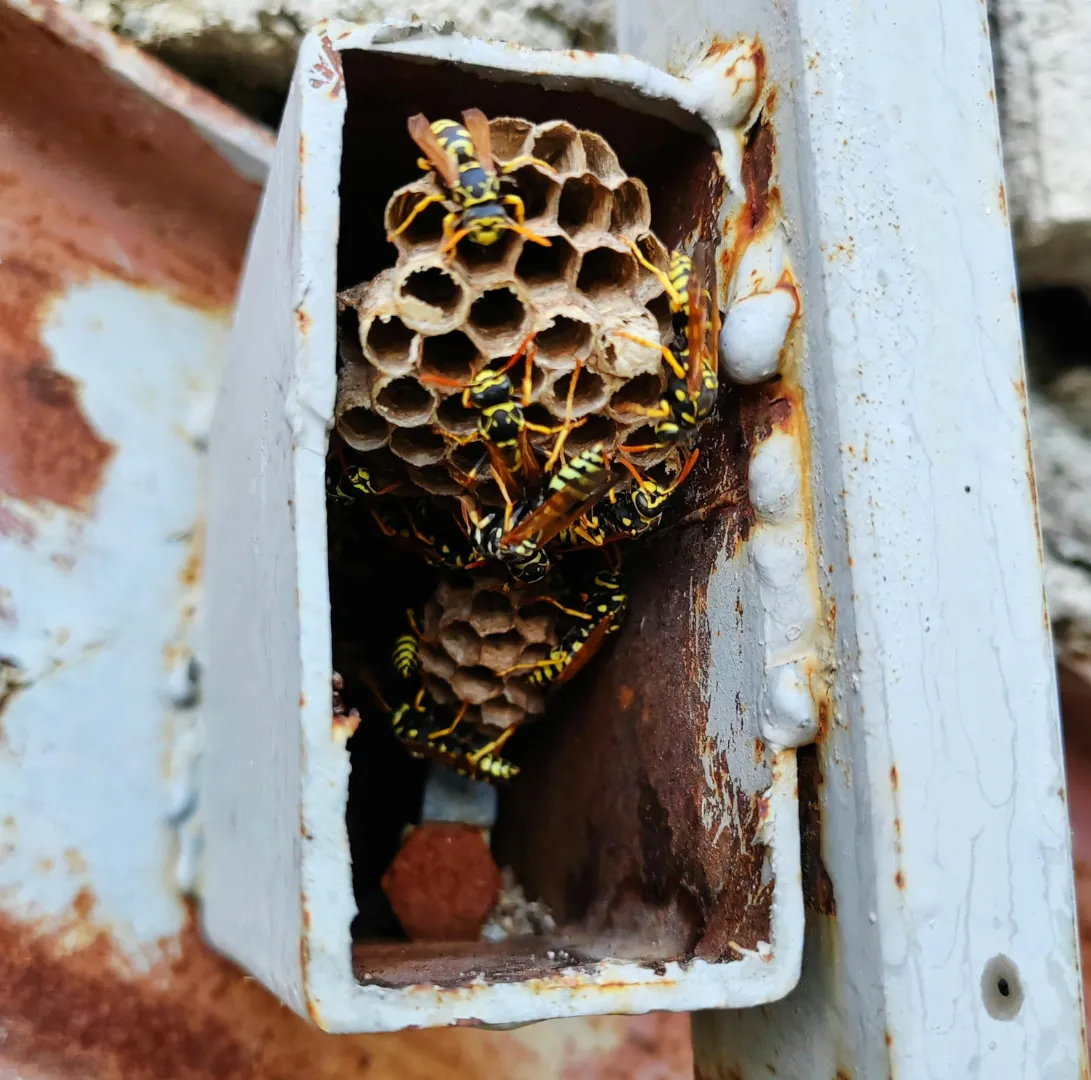
European wasps massing at a nest entrance
Where they nest around your home
Wasps favour sheltered, protected spots: under eaves and guttering, inside wall cavities and roof voids, beneath decks and pergolas, and in dense shrubs. Bees may set up in a wall cavity, chimney or tree hollow. The danger is that these locations are often right beside doorways, outdoor dining areas and play spaces where people unknowingly get too close.
European wasps massing at a nest entrance
Signs of a nest
A steady stream of wasps flying to and from one point under the eaves or roofline.
A papery, grey nest under guttering, decking or in shrubs
Bees clustering around a wall cavity, weep hole or tree hollow
A sudden rise in stinging activity around bins or outdoor meals.
How we deal with it safely
Treating stinging insects is genuinely dangerous and is not a DIY job. Our technician will carry the right protective equipment and products to do it safely:
We identify the species and locate the nest from a safe distance.
For wasps, we treat and remove the nest using protective gear and professional products.
For honey bees, wherever it is safe and practical we can refer or coordinate with a local beekeeper regarding honey-bee swarm relocation so the colony survives.
We advise on sealing the void afterwards so a new swarm cannot reuse it.
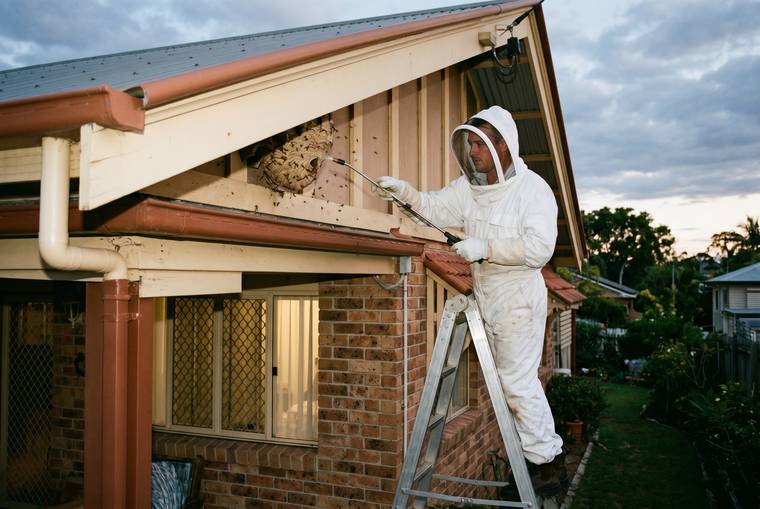
Treating a wasp nest safely in full protective gear

Never block a wasp or bee entry hole or try to burn or hose a nest. Trapped insects will find another way out, often into your living space, and disturbed nests attack. Keep everyone clear and let a professional handle it.
Reducing the risk around your home
Check eaves, sheds and pergolas in early spring when nests are small and easier to manage.
Keep outdoor bins sealed and clear of sweet residue that attracts wasps.
Cover food and drinks when dining outside in summer.
Seal gaps and cracks in external walls and around the roofline before nesting season.
HELPFUL INFORMATION
WHAT YOU NEED TO KNOW
Act early, before the nest grows
A nest only gets bigger, busier and more dangerous as the season goes on, so the safest and cheapest time to deal with it is now. If you have spotted activity, contact BioStrike and we will handle it without putting your family at risk.
Sting risks you should not ignore
For most people a single sting is painful but minor; the danger lies in numbers and in allergy. Disturbed wasps sting repeatedly and in defensive swarms, and European wasps are notoriously aggressive around their nest. For anyone with a sting allergy, a single encounter can trigger anaphylaxis, a medical emergency. Children and pets are especially vulnerable because they may not recognise a nest until they are right on top of it. This is why a nest near a doorway, play area or outdoor setting should never be left to chance.
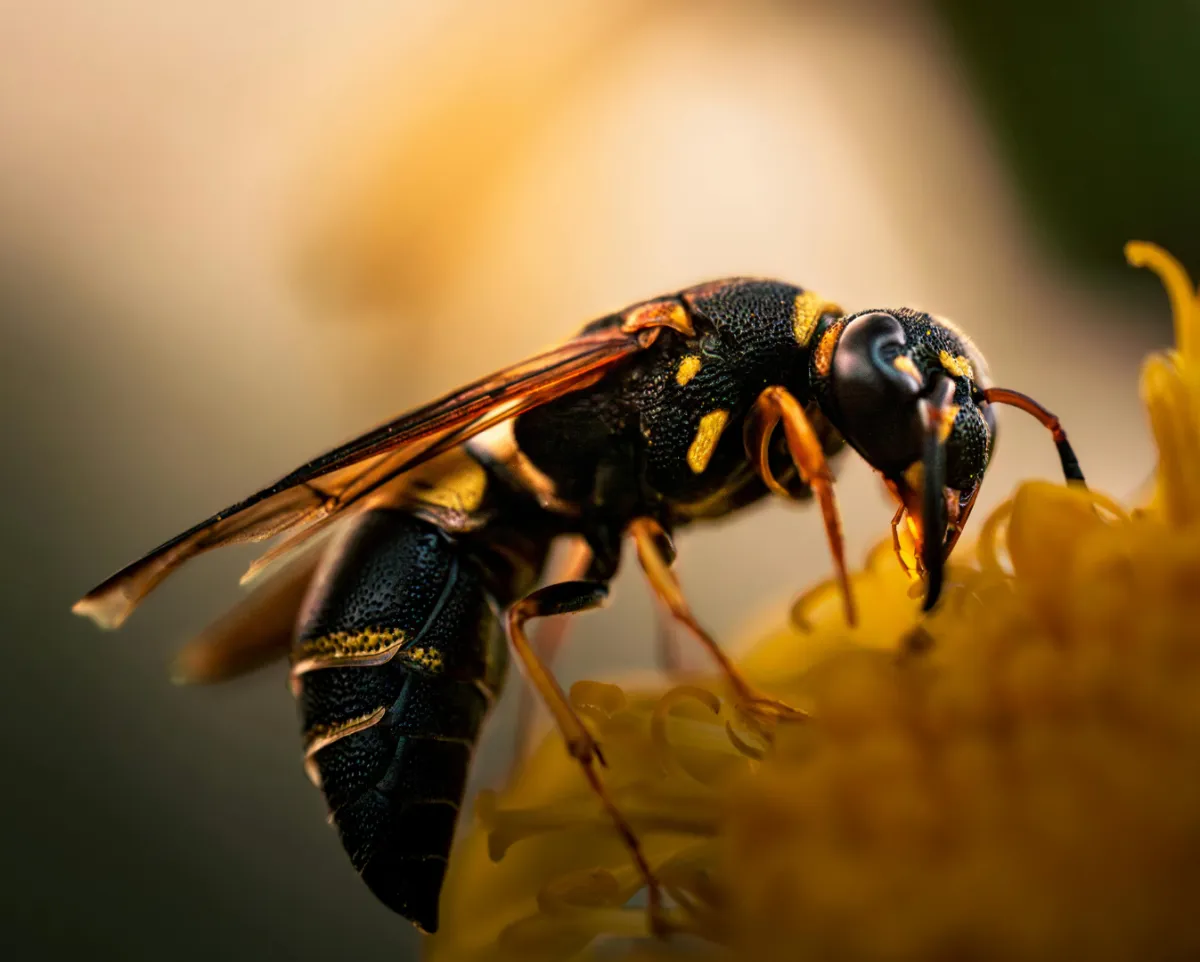
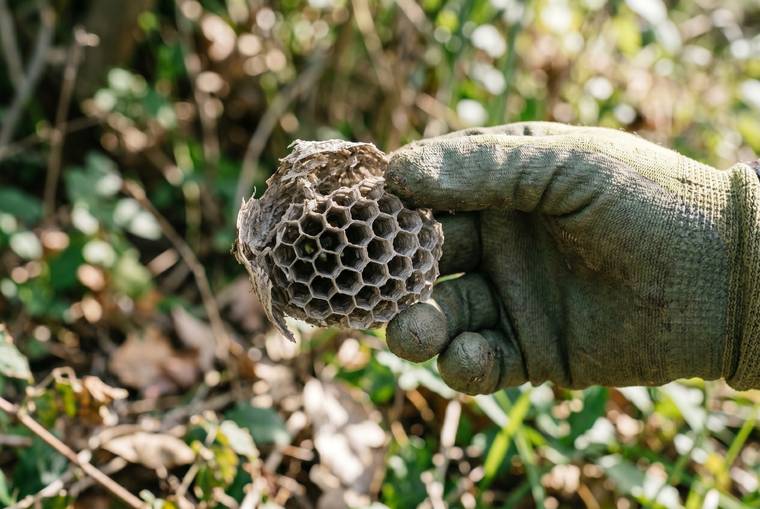
A removed nest reveals the papery comb inside
Why removing a nest yourself is dangerous
DIY nest removal sends people to hospital every summer. Spraying a nest from a ladder invites a panicked fall, partial treatments leave angry survivors and nests hidden in wall cavities or roof voids are almost impossible to treat safely without the right equipment and experience. We treat from a safe position with proper protective gear and professional products, then make sure the nest is dealt with completely rather than simply stirred up.
A removed nest reveals the papery comb inside
Bees: relocation before destruction
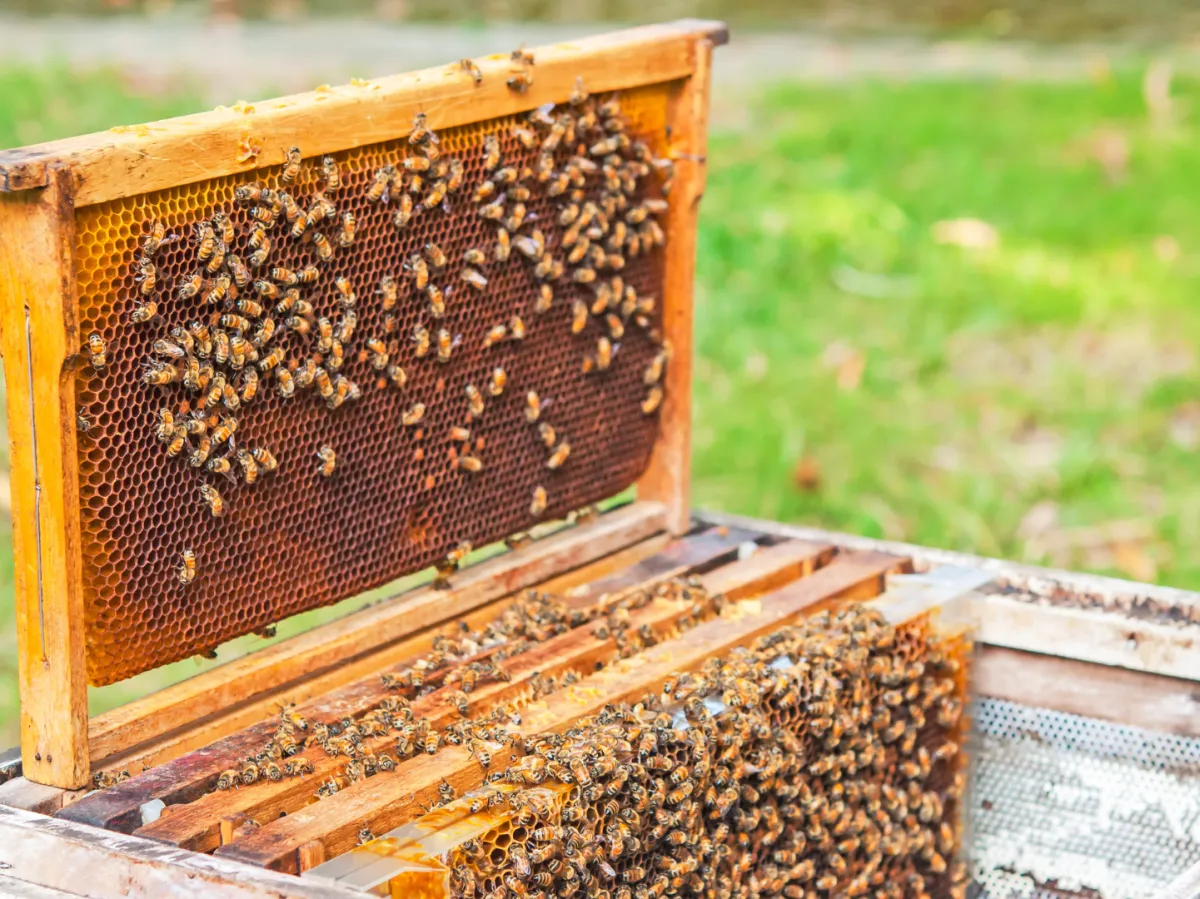
Honey bees are precious pollinators, and we treat them very differently to wasps. A swarm that has recently landed can often be collected and relocated by a beekeeper, while an established hive inside a wall is a more complex job. Wherever it is safe and practical, our first preference is always to save the colony rather than destroy it. We will give you an honest assessment of what is possible for your situation.
Seasonal wasp activity in the Hunter Valley
Wasp nests start small and quiet in spring, then grow rapidly through summer into large, heavily defended colonies by late summer and autumn. The earlier in the season a nest is found and treated, the safer and simpler the job. If you notice wasps repeatedly tracking to one spot in spring, that is the ideal moment to act, before the nest becomes a serious hazard.
Local. Licensed. Ruthless on pests.
Don’t let bees & wasps settle in
Early action is cheaper and easier. Get a fast, free quote from your local Maitland pest business today.
PESTS WE TREAT
Dealing with something else?
WHAT LOCALS SAY
Trusted across the Hunter Valley

“Friendly, upfront about pricing and brilliant with our dog underfoot the whole time. The ants have not come back since.”
Priya S.
Thornton
SERVICE AREA
Proudly servicing Maitland & the Hunter Valley
Based in Chisholm, we look after homes and businesses across the region. If your suburb is not listed, get in touch – chances are we cover it.
Maitland
East Maitland
Rutherford
Chisholm
Thornton
Beresfield
Raymond Terrace
Kurri Kurri
Cessnock
Branxton
Singleton
Newcastle
Lake Macquarie
Port Stephens
FAQ'S
Questions, answered
DO YOU KILL HONEY BEES OR RELOCATE THEM?
Where practical we can refer or coordinate relocation with a local beekeeper, because honey bees are valuable pollinators. A swarm that has recently landed can often be collected by a beekeeper. An established hive inside a wall cavity is a more complex job, and we will give you an honest assessment of the options for your situation.
HOW QUICKLY CAN YOU ATTEND A WASP NEST?
We treat active wasp nests as a priority, particularly when they are near a doorway, play area or outdoor dining space, or when someone in the household has a sting allergy. Call us and we will give you the earliest realistic time rather than an empty promise.
CAN I JUST TREAT THE WASP NEST MYSELF?
We strongly advise against it. Disturbed wasps sting repeatedly and in numbers, spraying from a ladder invites a serious fall, and partial treatments leave an angry, defensive colony behind. Nests hidden in wall cavities or roof voids are close to impossible to treat safely without proper protective equipment.
WHAT IF THE NEST IS INSIDE A WALL CAVITY OR THE ROOF?
Never block the entry hole. Trapped insects will chew and push their way out, often into your living space instead of outside. We treat the area, then advise on sealing it properly afterwards so a new swarm cannot reuse the same cavity.
WHEN IS WASP SEASON IN THE HUNTER VALLEY?
Nests start small and quiet in spring, then grow rapidly through summer into large, heavily defended colonies by late summer and autumn. If you notice wasps repeatedly tracking to one point in spring, that is the ideal moment to act, while the nest is small, the risk is low and the job is simple.
Licensed, insured and locally owned pest control protecting homes and businesses across Maitland and the Hunter Valley.
Local. Licensed. Ruthless on pests.
OUR SERVICES
PESTS WE TREAT
GET IN TOUCH
Mon–Fri 7am–5pm
Sat 8am–2pm
QUICK LINKS
Privacy Policy | Terms & Conditions
© 2026. BioStrike Pest Solutions. All rights reserved.